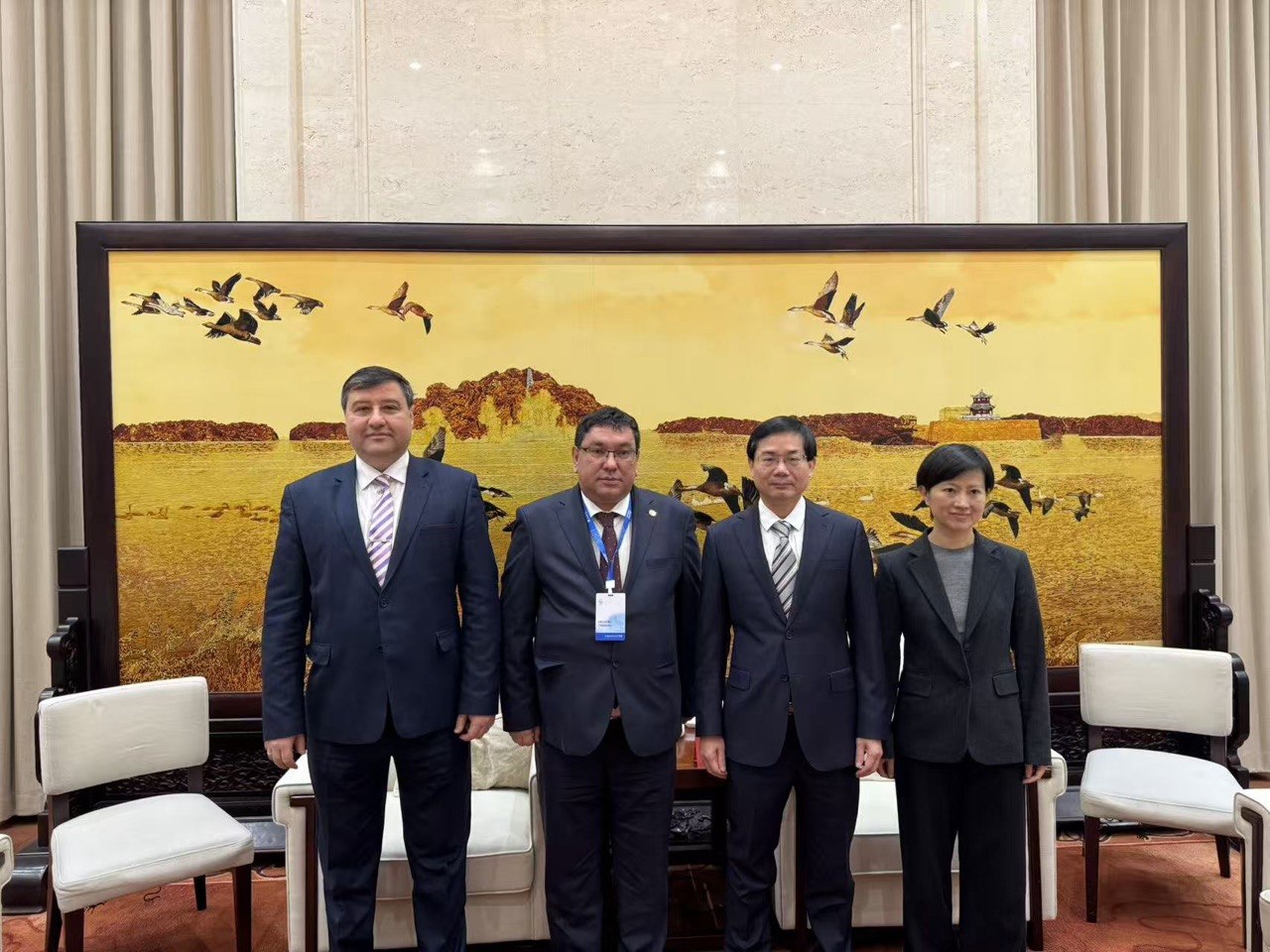
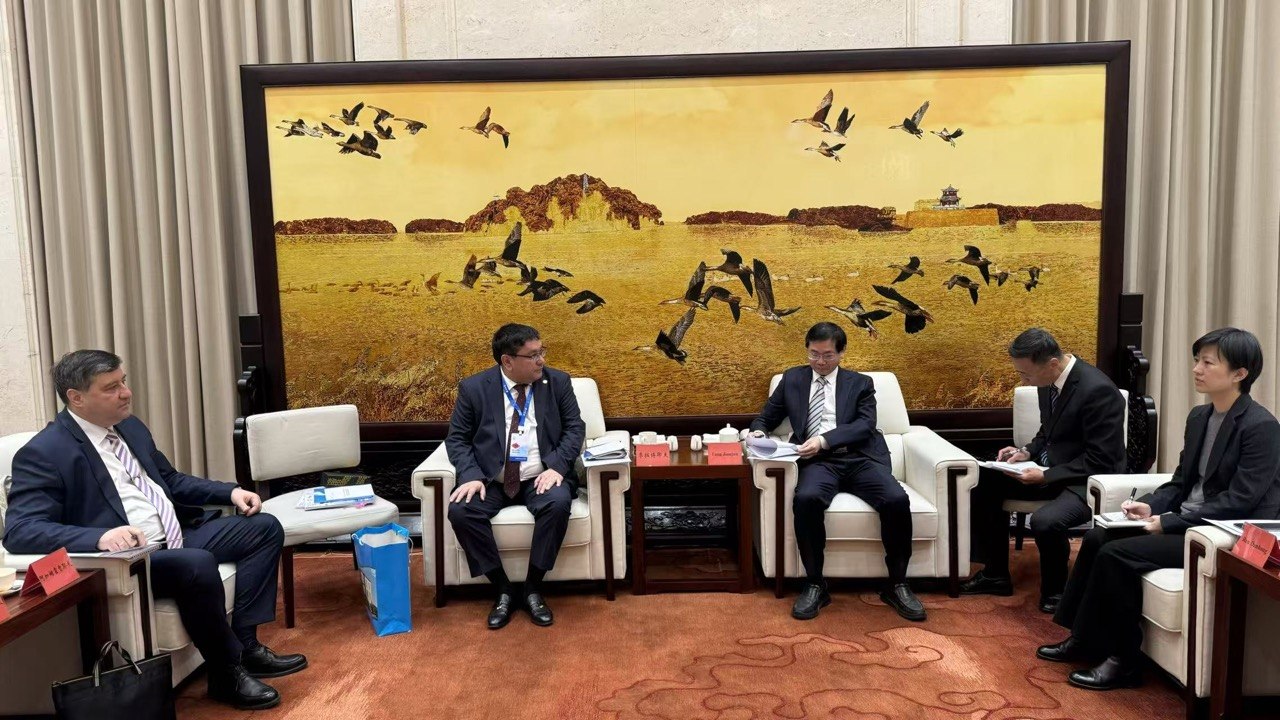
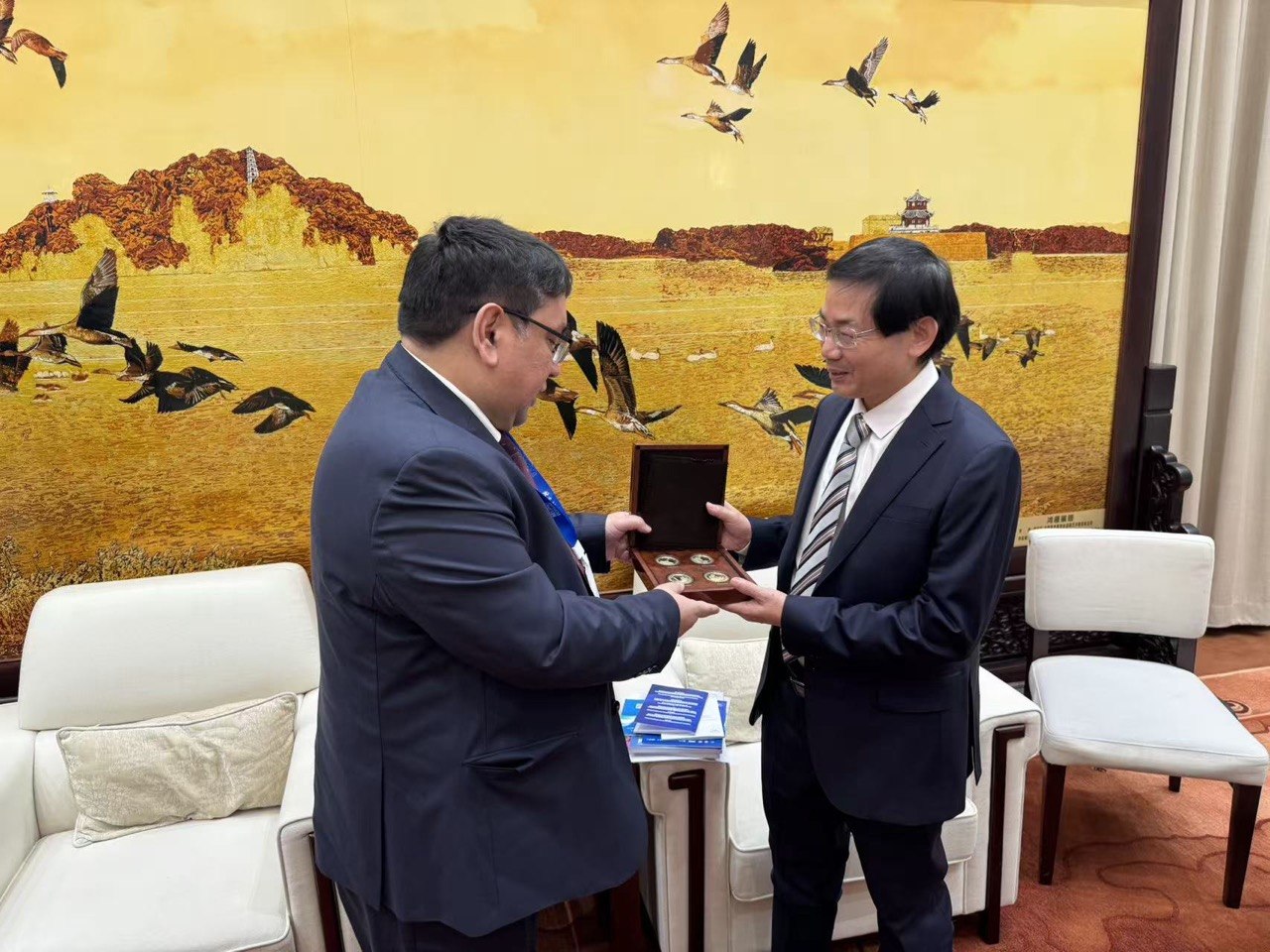
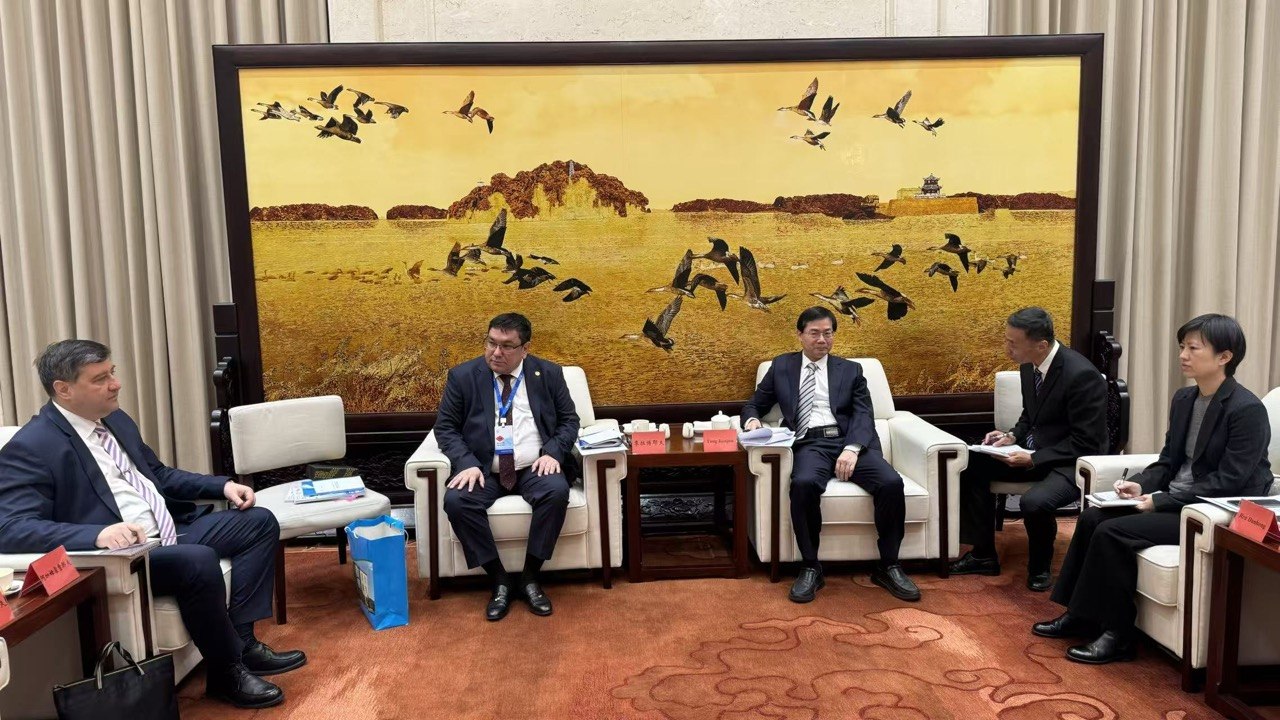
On 6 November, with the assistance of the diplomatic mission of Uzbekistan in the PRC, Mirzatillo Tillabaev, First Deputy Director of the National Centre for Human Rights, met with Tang Jianzhong, Secretary-General of the China Society for Human Rights Studies (CSHRS).
The meeting was attended by Saidkamol Agzamkhodjaev, Minister-Counsellor of the Embassy of the Republic of Uzbekistan in Beijing, and research fellows of the China Society.
The Secretary-General highly commended the fruitful outcome of the 5th Samarkand Forum on Human Rights, held on 28–29 September this year with the participation of Jiang Jianguo, Executive Vice President of the CSHRS.
“We see Uzbekistan’s considerable achievements in this area. Thanks to the wise leadership of President Shavkat Mirziyoyev and his sincere care for his own nation, human rights issues have been elevated to the level of state policy. Today, child labour and forced labour have been eradicated in the republic, which has earned high recognition from the international community.
It is no coincidence that the outcome document, ‘Samarkand Vision – 2040: Global Cooperation for Human Dignity, Equality and Sustainable Development’, was adopted as an official document of the 81st session of the UN General Assembly. This is, without doubt, a sign not only of recognition but also of open support for the large-scale reforms to build a New Uzbekistan.
Today’s transformations in Uzbekistan reflect, more than ever, the philosophical meaning of the Chinese proverb: ‘Take history as a mirror, so as to study past mistakes and draw lessons while looking to the future.’”
Tang Jianzhong offered his congratulations on the successful presentation of the book by President Shavkat Mirziyoyev, “Uzbekistan on the Path of Sustainable Development and Prosperity”, published in Chinese.
“I have personally begun studying this collection with great interest, in order to gain an even deeper understanding of the essence and philosophy of the grand reforms under way in your country. We are also grateful that President Xi Jinping’s book ‘On Respecting and Protecting Human Rights’ was earlier published in Uzbekistan in the Uzbek language for the first time. Such works by our Leaders stimulate genuine interest among the general public in the achievements of both countries.”
In the Secretary-General’s view, “on human rights issues, Uzbekistan and the PRC should speak from a common position and actively coordinate their initiatives in the international arena, in accordance with the Memorandum of Understanding between the NHRC and the CSHRS. We should also explore ways of aligning China’s National Human Rights Action Plan for 2026–2030 with Uzbekistan’s new ‘Human Rights – 2030’ Strategy, now being drafted, with an emphasis on the study of human rights law-making, social security, rural revitalization, digitalization, artificial intelligence, entrepreneurship, health care, education and youth employment.”
The Chinese side noted the active cooperation in the field of human rights both bilaterally and on international platforms, as exemplified by the 4th China–Central Asia Forum on Human Rights Development, held in Tashkent on 14 May 2026.
During the meeting, the parties also exchanged views on deepening bilateral cooperation in the field of human rights. It was proposed that in 2027 — the year of the 35th anniversary of the establishment of diplomatic relations — as part of the implementation of the United Nations Declaration on Human Rights Education and Training, the active exchange of experts be stepped up for training sessions and the mutual study of experience, along with the arrangement of publications in the journal “Democratization and Human Rights” and in “Human Rights”, the analytical journal of the China Society for Human Rights Studies.
Press Service of the National Centre
of the Republic of Uzbekistan for Human Rights