
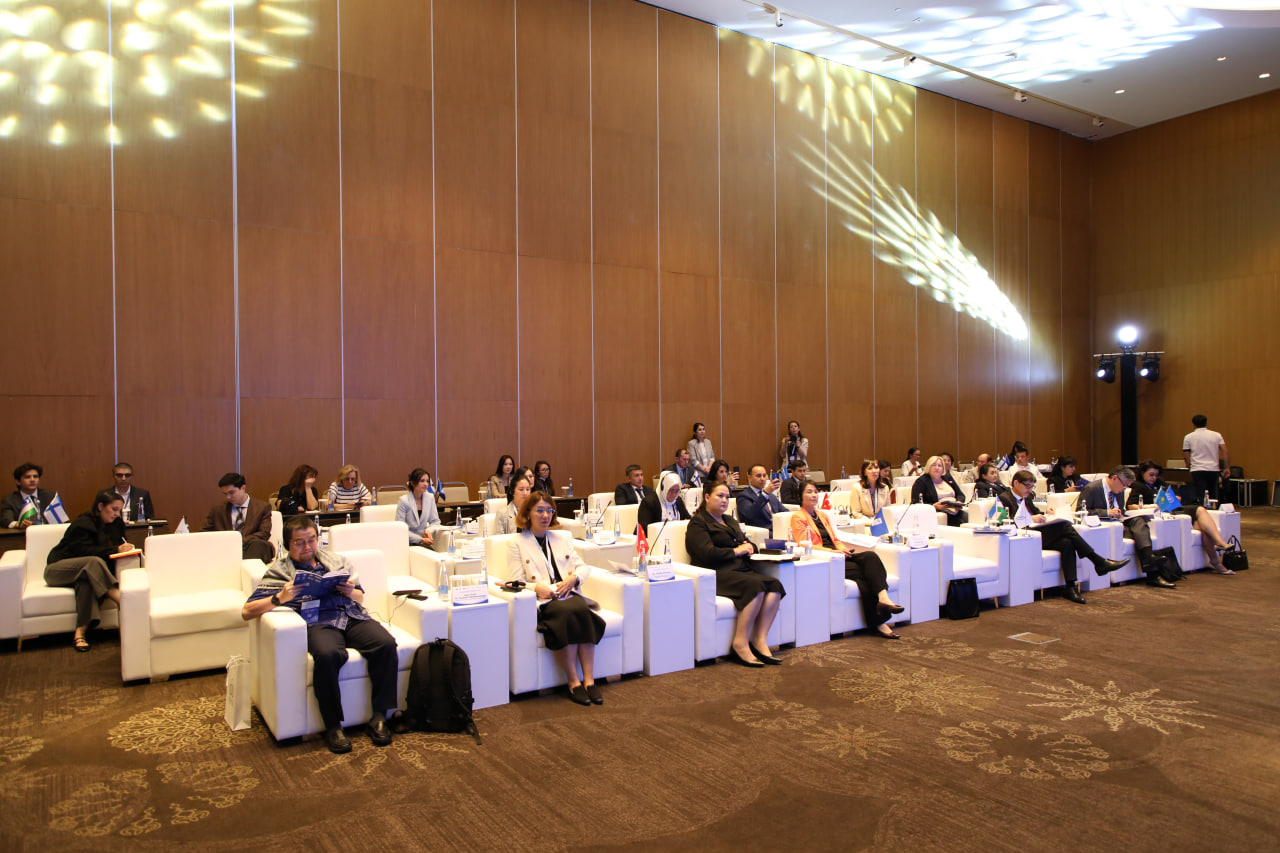
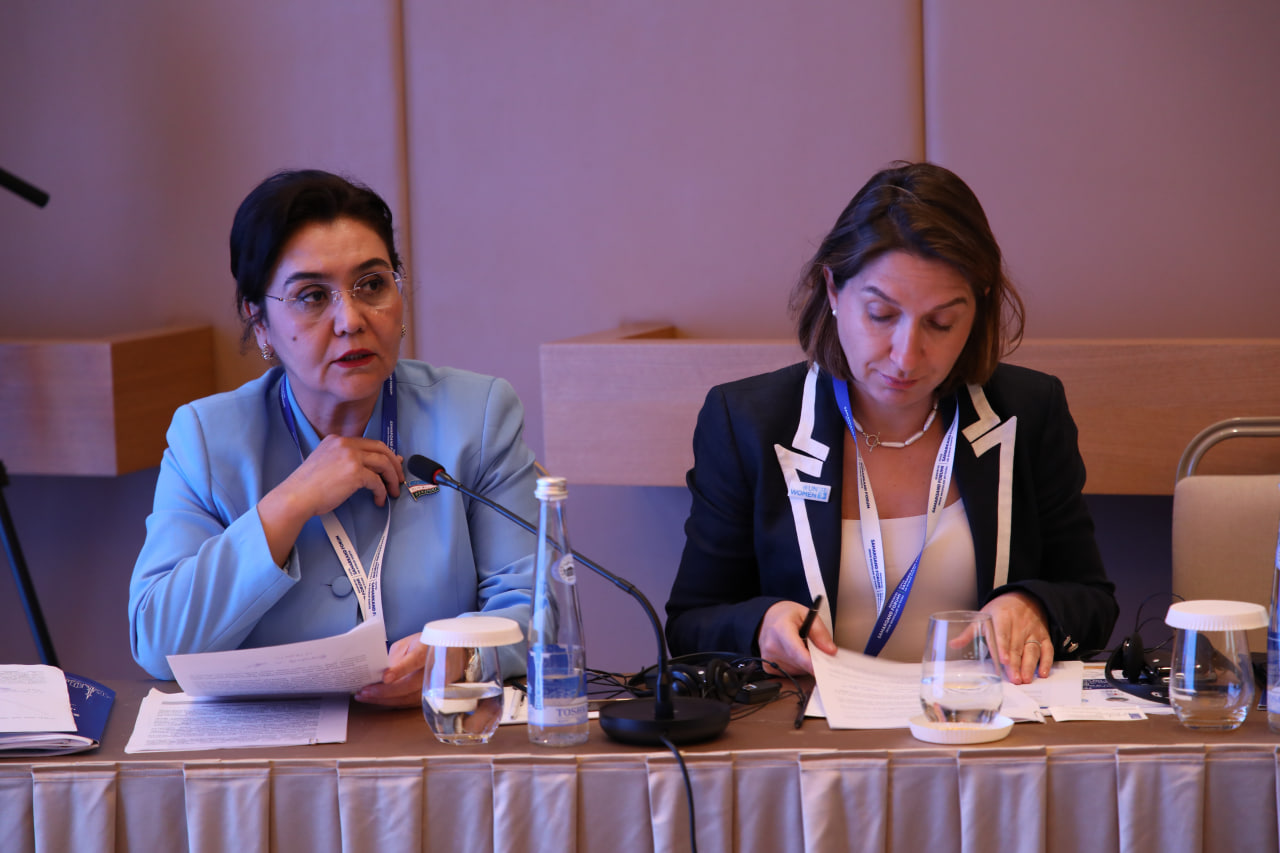
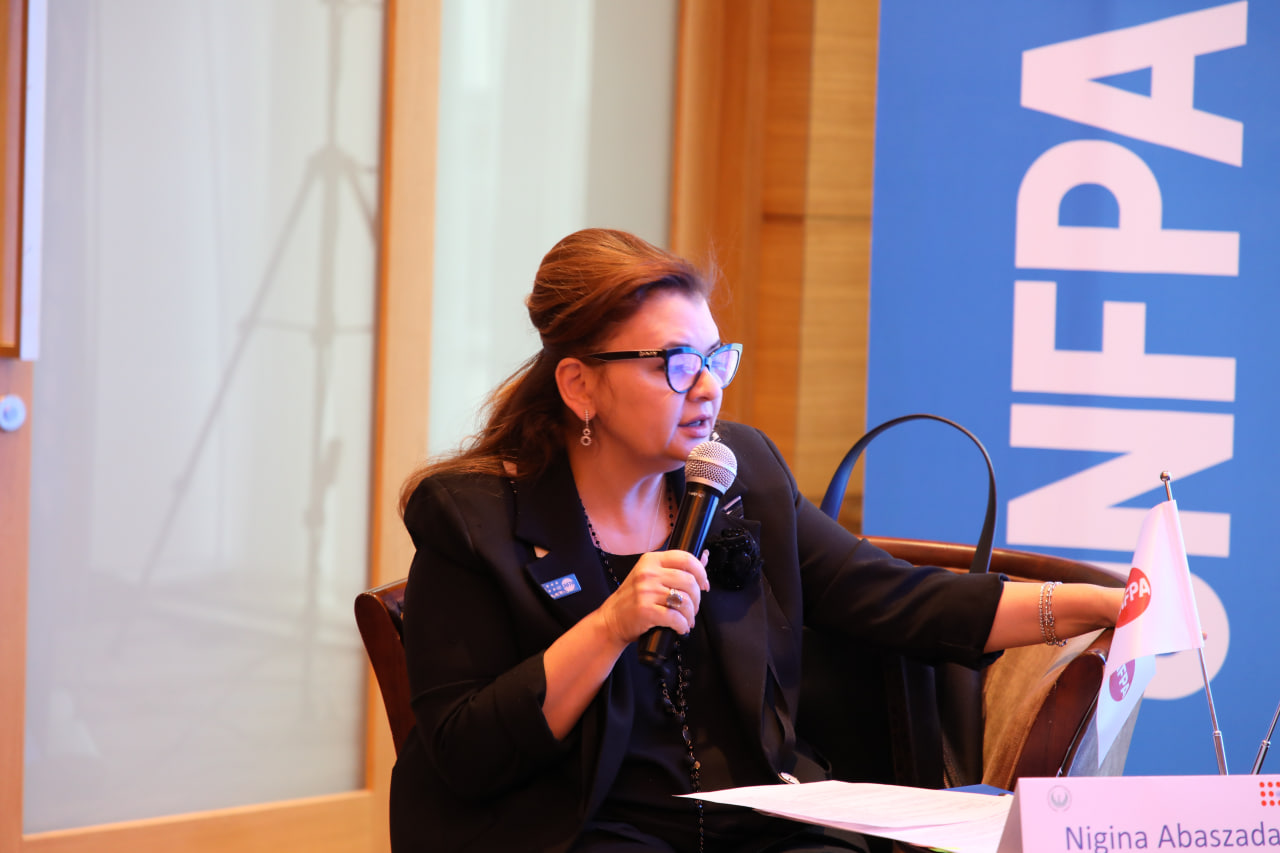
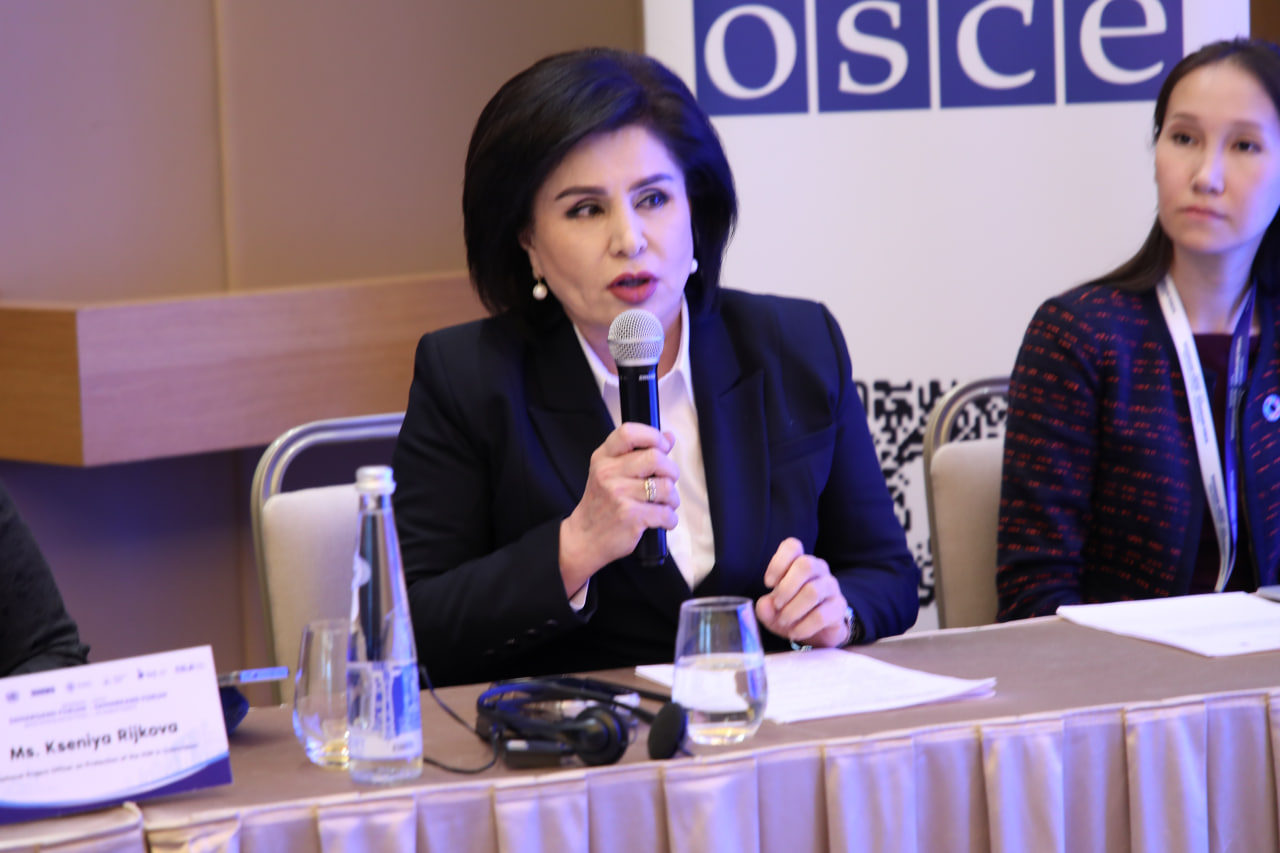
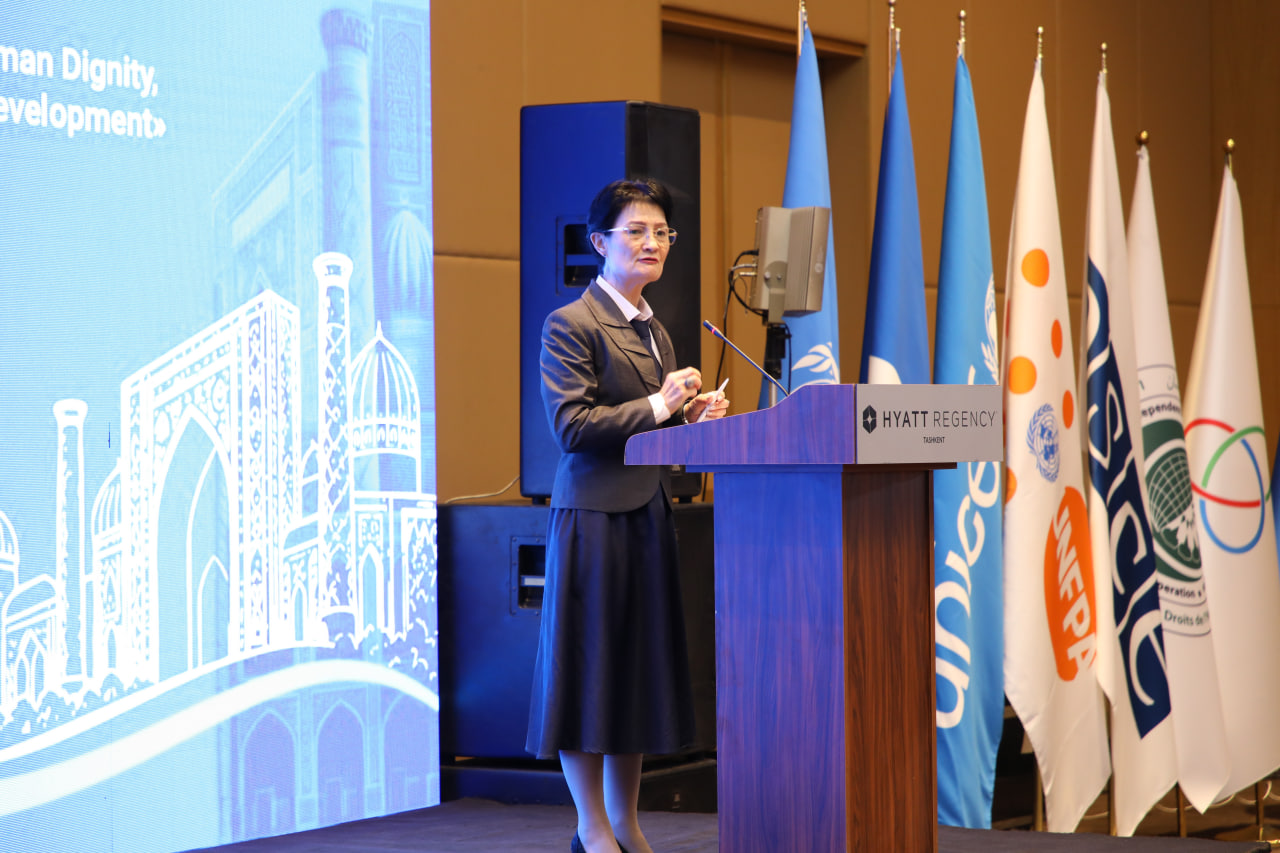
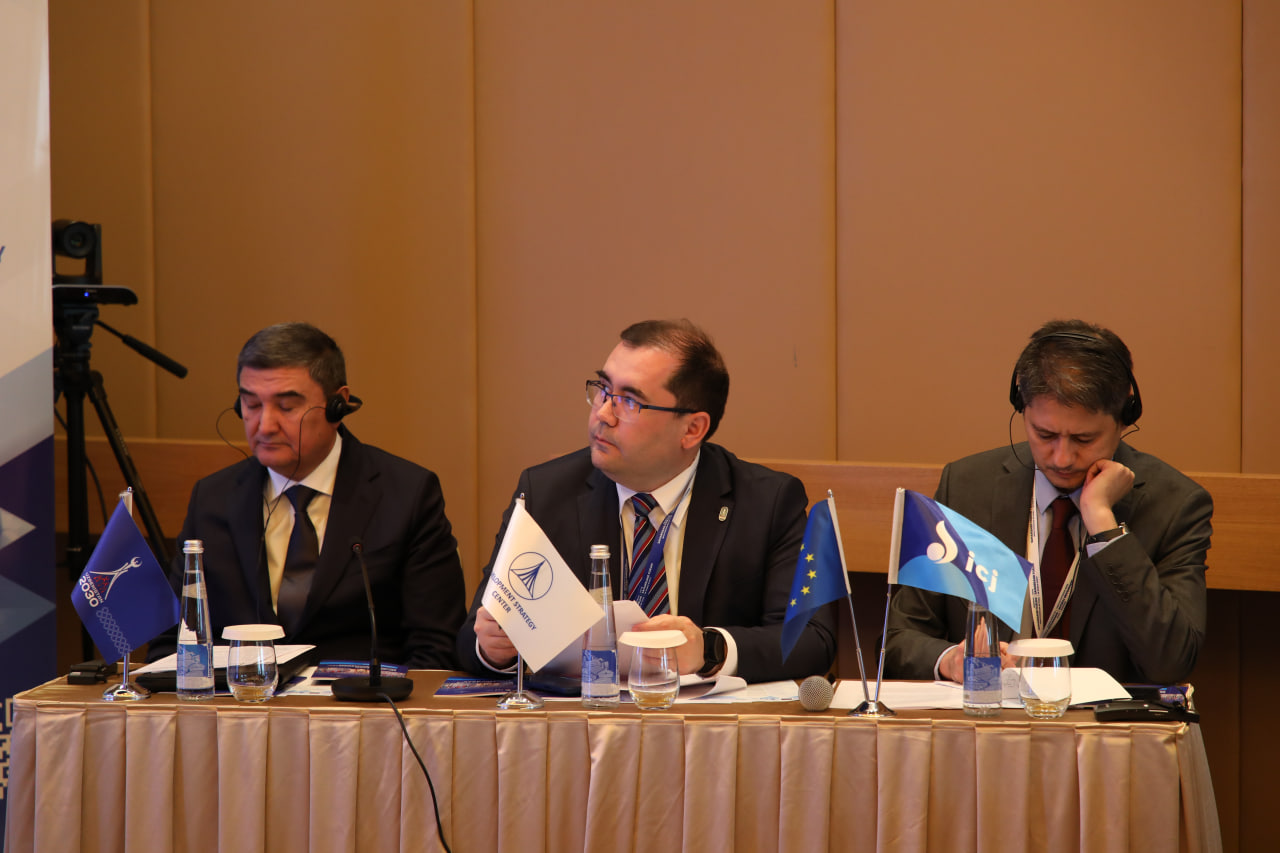
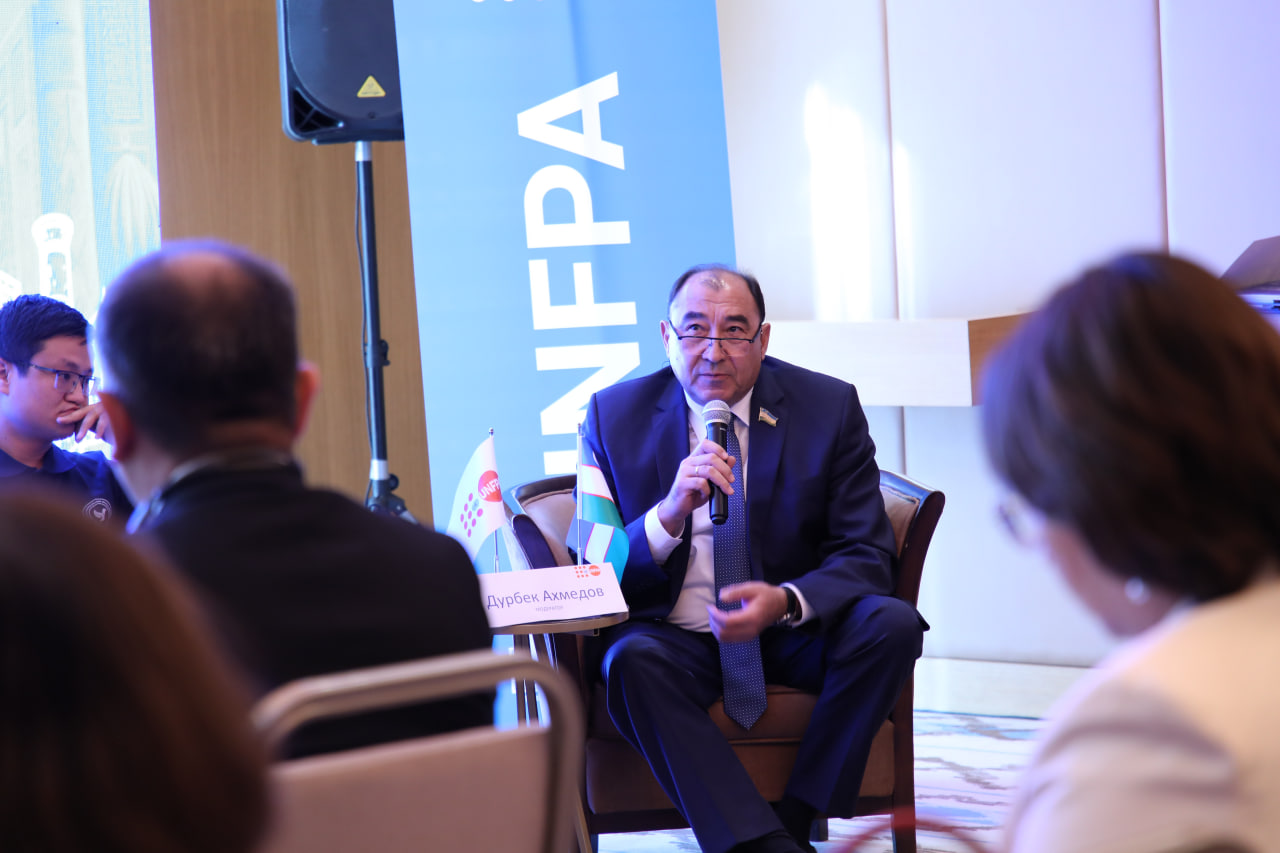
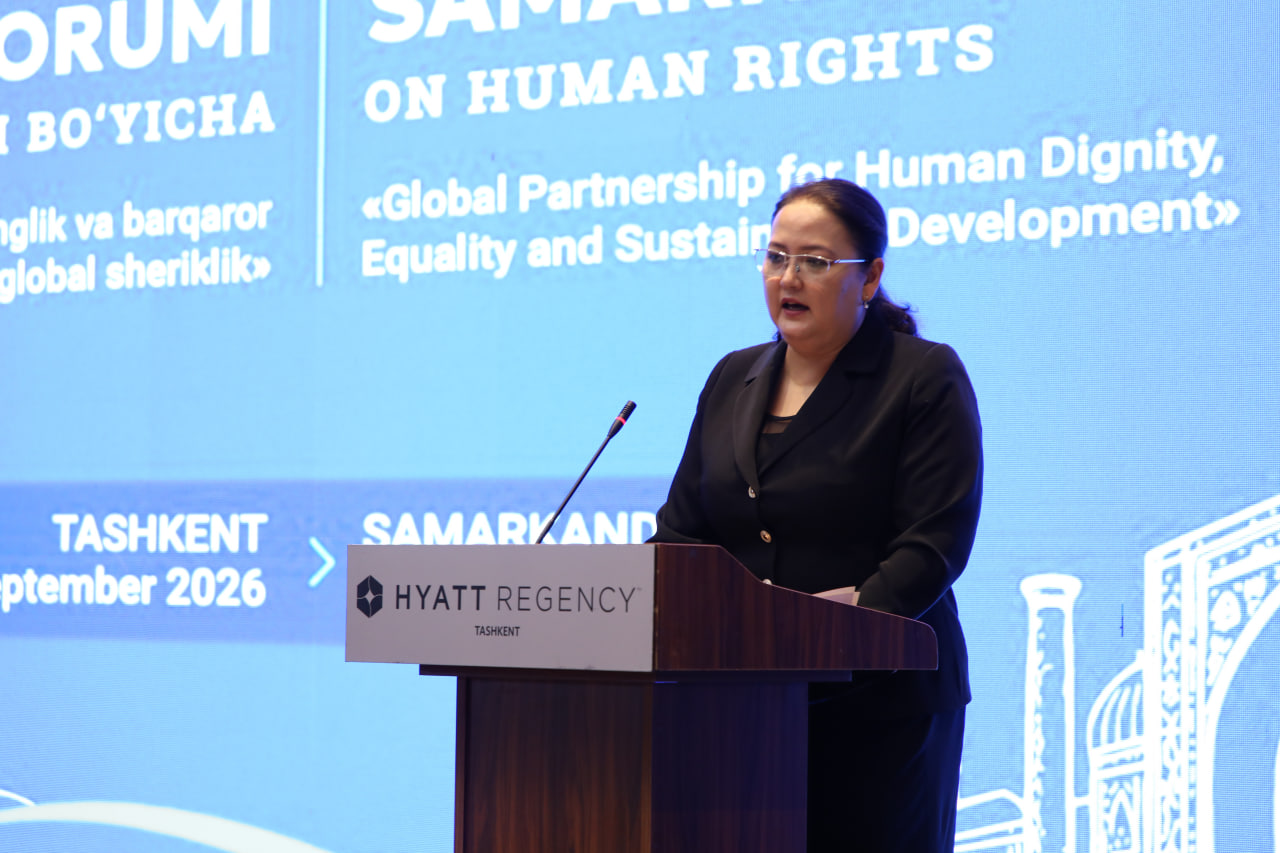
The Fifth Samarkand Forum on Human Rights opened in the capital on September 28. During the plenary sessions, participants held in-depth discussions on the sixty-year experience of international covenants, the significance of the right to development as a universal human right, and ways to further strengthen international and national human rights systems in response to global solidarity needs and modern challenges.
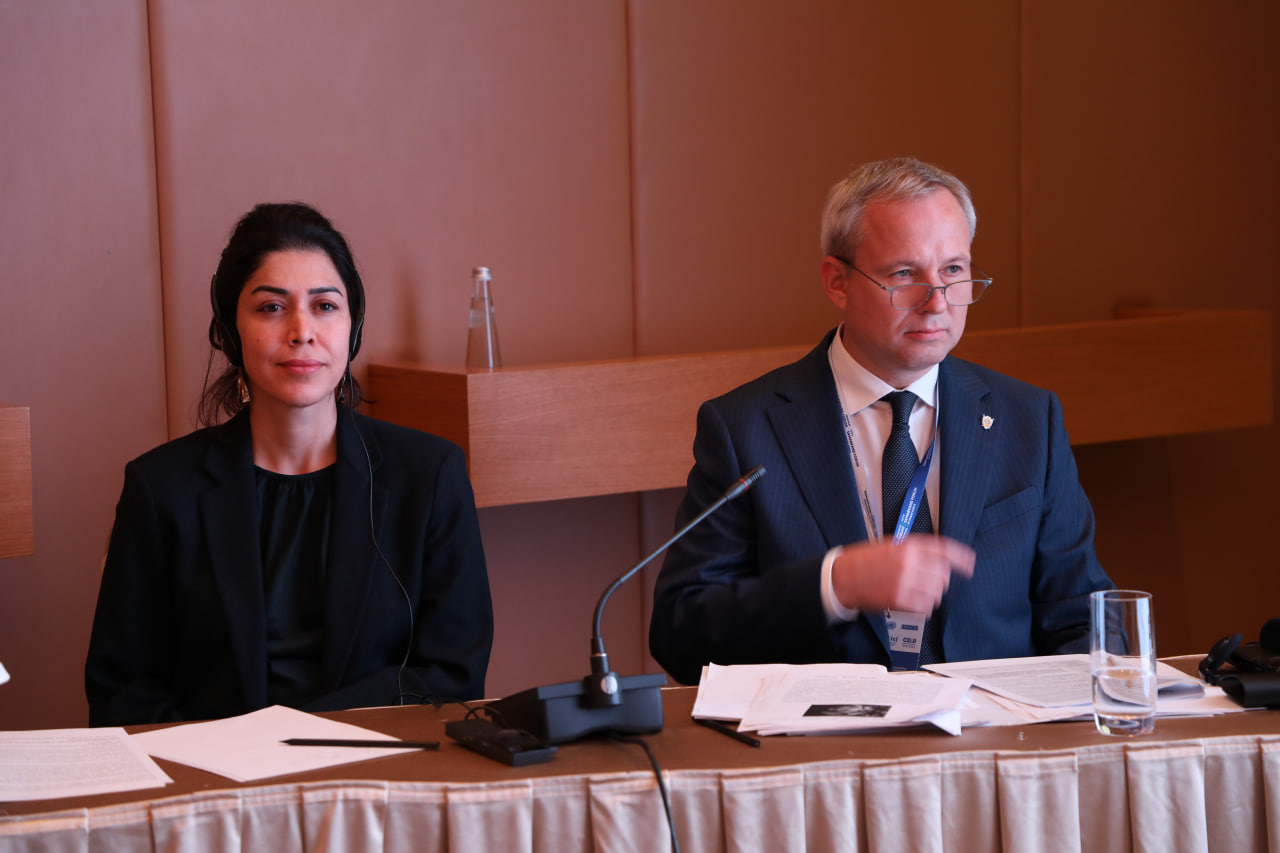
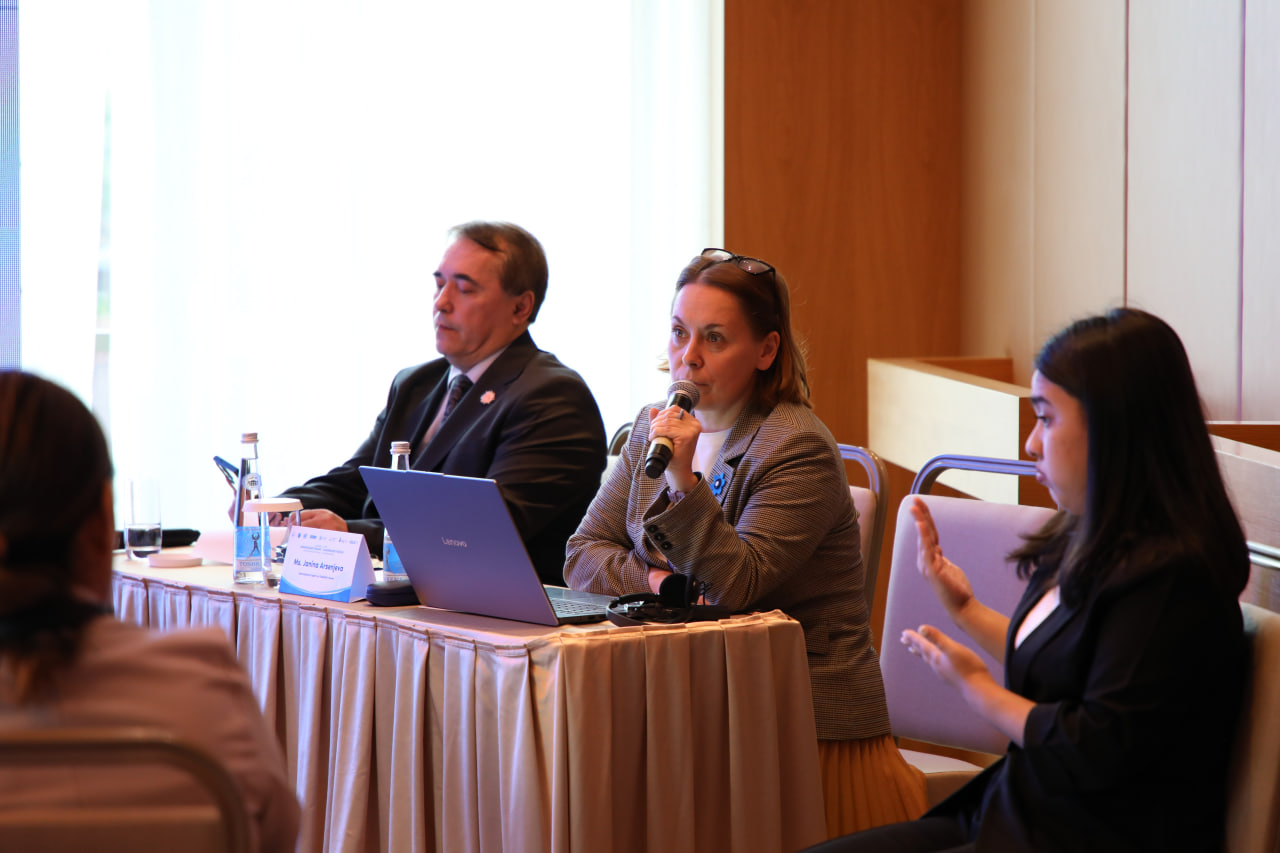
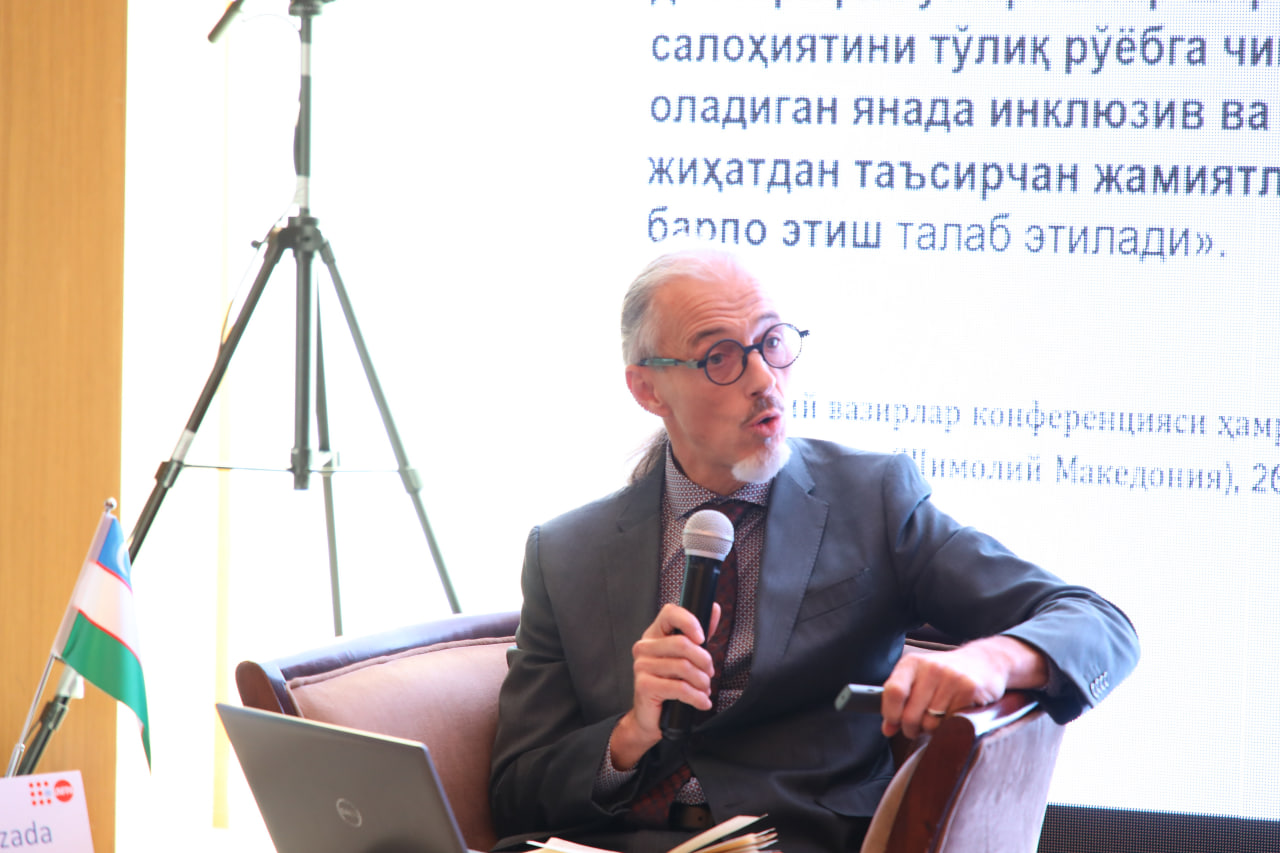
Subsequently, the Forum continued its work through seven breakout sessions. Held concurrently, these sessions addressed critical issues such as civil and political rights; economic, social, and cultural rights; the rights of children, women, and persons with disabilities; the right to a healthy environment and climate justice; artificial intelligence and digital technologies; and the prevention of statelessness.
The first session was dedicated to the theme: "The 60th Anniversary of the International Covenant on Economic, Social and Cultural Rights and the 40th Anniversary of the Declaration on the Right to Development: Advancing Sustainable Development through Human Rights." Key speakers addressed topics such as the right to education and the provision of quality, inclusive, and lifelong learning; the right to health and the strengthening of resilient health systems amidst modern threats; and decent work, social protection, and equitable economic growth as foundations for sustainable development.
Speakers also focused on other pressing issues, including poverty reduction, the elimination of inequality, and the promotion of inclusive development; the role of national experience and international cooperation in realizing the right to development and the Sustainable Development Goals; the financing of sustainable development and the role of international financial institutions in implementing economic, social, and cultural rights; as well as the protection of cultural heritage in situations of armed conflict.
The second session addressed the topic: "The 60th Anniversary of the International Covenant on Civil and Political Rights: The Rule of Law and New Threats." In their presentations, national, foreign, and international experts focused primarily on the relationship between international law and national legal systems—specifically, the binding nature of treaty obligations and the principle that a state cannot invoke its domestic law to justify non-performance of a treaty. Participants exchanged views on the obligation to ensure the Covenant's application within the national legal order and the alignment of national legislation with its provisions.
Additionally, detailed analyses were conducted regarding the reporting cycle, follow-up measures on concluding observations, and the coordination of implementation among state agencies; the role of national courts, prosecutors, and lawyers in ensuring the application of the Covenant and the Human Rights Committee’s interpretations; and the place of the individual communications procedure within national practice and domestic litigation.
The session also covered the interpretation and evolution of the Covenant’s provisions by the Human Rights Committee over the past sixty years, as well as the potential for the treaty body system to support national implementation. Proposals were put forward regarding the teaching of the Covenant’s provisions within national legal education and the professional training of judges, lawyers, and prosecutors, as well as regarding new approaches to interpreting and applying these provisions in the contemporary practice of the UN Human Rights Committee.
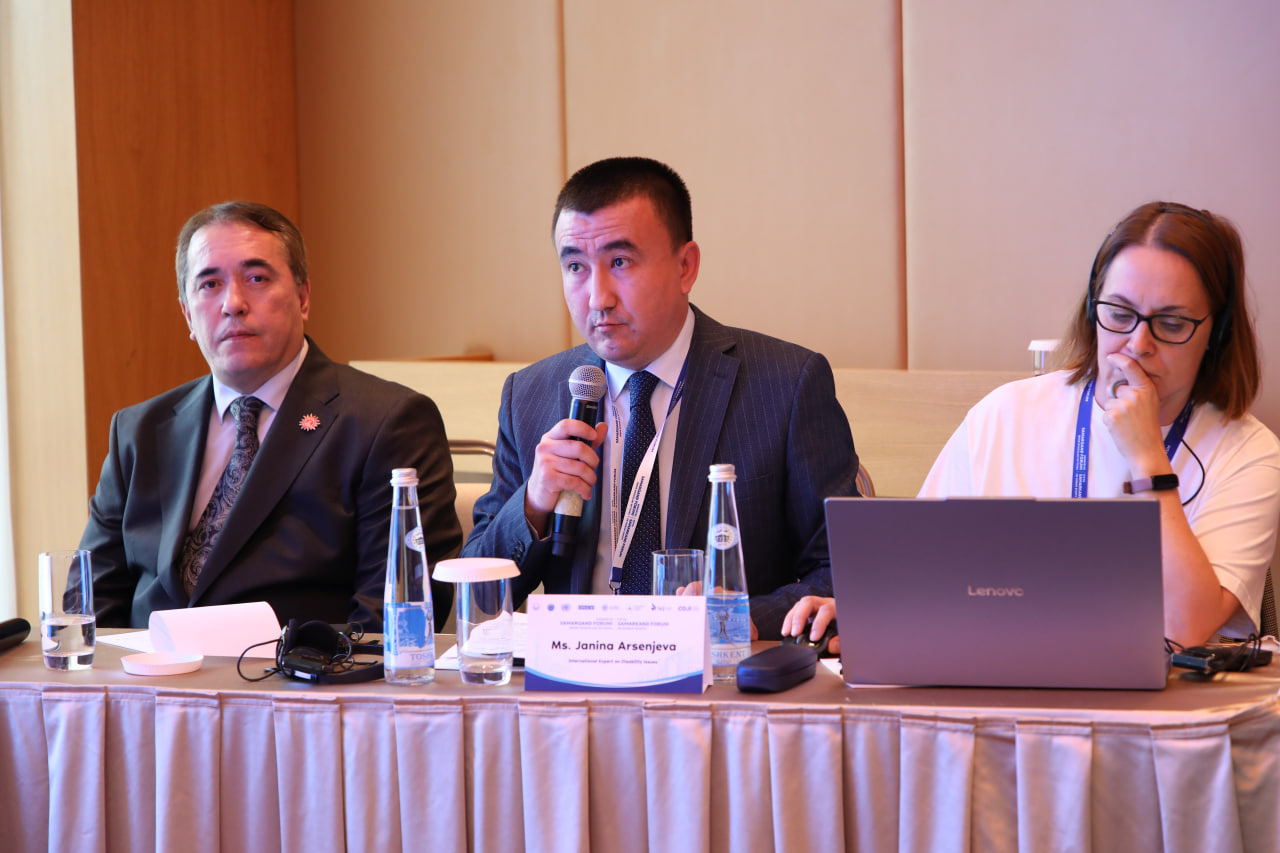
The third session was held under the theme "20 Years of the Convention on the Rights of Persons with Disabilities: From Recognizing Rights to Inclusive Societies." Speakers emphasized the importance of strictly fulfilling obligations to strengthen the effective realization of the rights of persons with disabilities. They addressed issues such as removing barriers to full inclusion—specifically regarding equality, non-discrimination, and accessibility—and ensuring equal opportunities in inclusive education, decent work, and social protection.
Access to justice, independent living, and participation in community life were central topics, alongside an analysis of the opportunities and emerging risks associated with digital inclusion, assistive technologies, and artificial intelligence. The importance of national implementation, international cooperation, and adherence to the principle of "leaving no one behind" in the development process—while taking disability issues into account—was highlighted.
The fourth session focused on the theme "Demographic Sustainability: Human Rights, Human Capital, and the Well-being of Current and Future Generations." It provided a comprehensive analysis of human rights, youth, and family well-being as foundations for sustainable development and the realization of human potential. Discussions also addressed demographic trends—including population aging—and their impact on state policy, labor markets, social protection, and regional development.
Speakers addressed topics such as education, healthcare, future-oriented skills, and lifelong investment in human capital, as well as gender equality and informed choice within the context of demographic changes.
Speakers shared their views on education, healthcare, future skills, and investments in human capital throughout the life cycle; gender equality, informed choice, and inclusive participation in the context of demographic changes; and digital transformation and opportunities for youth to actively participate in decision-making regarding security and public policy. Particular attention was paid to international cooperation and innovative approaches to demographic resilience, intergenerational cohesion, and the well-being of current and future generations.
The theme of the fifth session was "Women's Rights, Gender Equality, and Climate Justice: From International Commitments to Effective Implementation." It focused primarily on the fulfillment by states of international obligations regarding women's rights and gender equality, emphasizing that women's economic empowerment is a key factor in sustainable, inclusive development and the reduction of inequality.
Presentations offered progressive ideas on issues such as climate change and women's rights—specifically protecting the most vulnerable groups and ensuring climate justice; women's access to natural resources, food, water, healthcare, and decent living conditions amidst climate change; and women's leadership and participation in decision-making at all levels of government. Discussions covered international standards and national practices for preventing all forms of discrimination and violence against women, as well as digital transformation and gender equality, exploring prospects for expanding women's access to technology, education, and innovation.
The sixth session addressed the theme "Artificial Intelligence, Digital Technologies, and Human Rights: Ethics, Legal Regulation, and International Cooperation." Discussions included a detailed analysis of international standards for the legal regulation of artificial intelligence and their impact on the protection of human rights.
Speakers presented reports on the ethical principles governing the development and deployment of artificial intelligence, focusing on ensuring transparency, accountability, and non-discrimination. artificial intelligence, digital technologies and privacy, protection of the right to freedom of expression and information; algorithmic discrimination, the digital divide, and ensuring equal access to AI-driven opportunities; global AI governance and international cooperation in an era of rapid technological advancement.
Participants examined the opportunities, risks, and human rights safeguards associated with the use of artificial intelligence in public administration and the justice system. Humanitarian organizations presented their views on the human cost of the increasing use of artificial intelligence in modern armed conflicts.
The seventh session was held under the theme "65th Anniversary of the Convention on the Reduction of Statelessness: Its Enduring Relevance, Achievements, and Future Prospects for Central Asian States." Speakers commended the past contribution of the 1961 UN Convention to protecting the right to nationality.
Discussions highlighted the progress made by Central Asian states in preventing and reducing statelessness, with an exchange of best practices and lessons learned in this area.
In particular, the role of regional cooperation—including the Ashgabat Declaration—and collaboration with international and civil society organizations was emphasized. Practical recommendations were proposed to strengthen the implementation of international standards and accelerate progress toward eradicating statelessness within the region and beyond.
The forum’s concluding plenary session will take place on September 29 in Samarkand.
Press Service of the National Center of the
Republic of Uzbekistan for Human Rights